
Tree Damage with practical, low-risk steps homeowners can use before, during, and after storms. You’ll learn what to inspect, when to trim or prune, and how to spot hazards early—so your trees, property, and family stay safe through freezing snaps, ice, and wind all season.
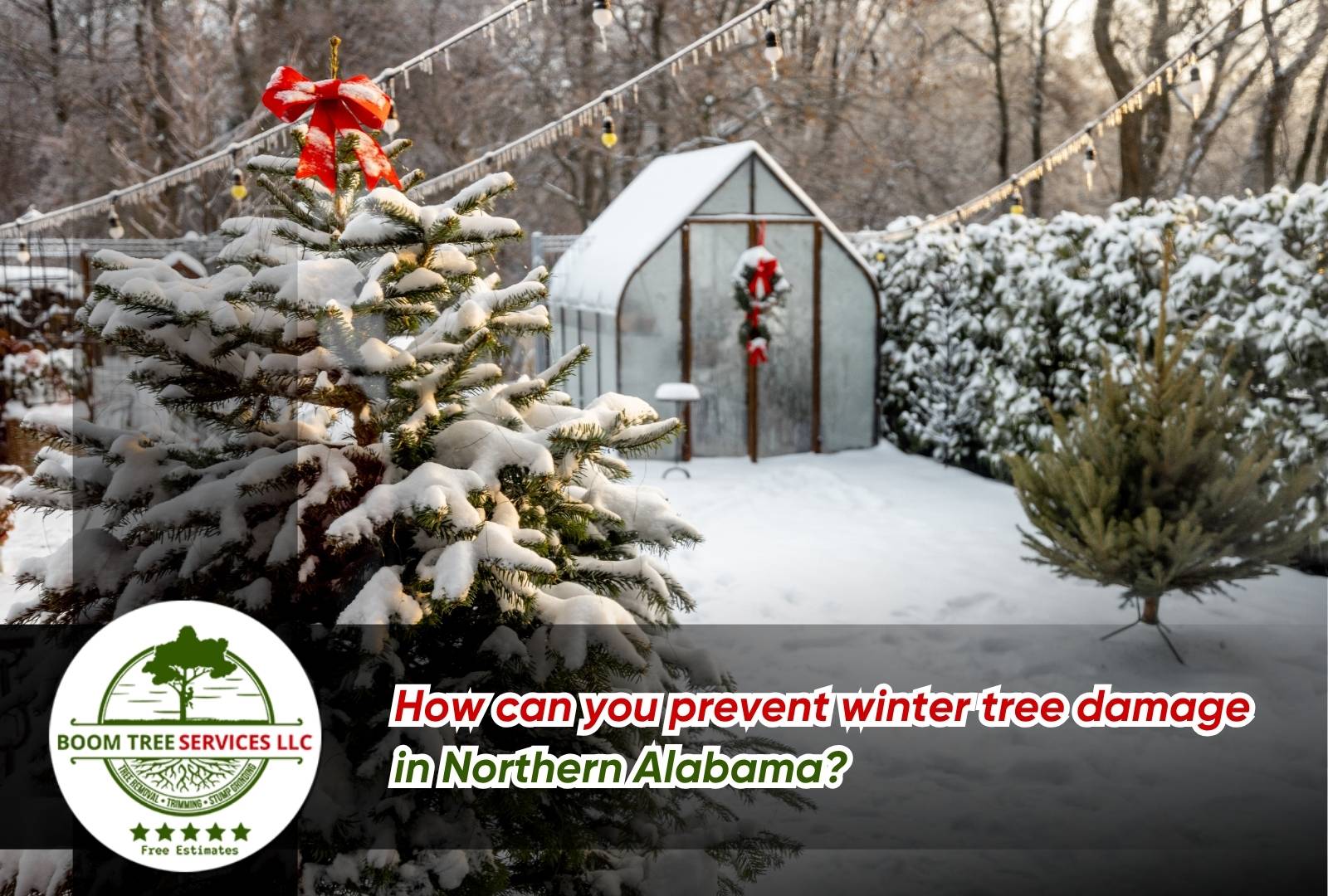
How can you prevent winter tree damage in Northern Alabama?
Start with a pre-season inspection, remove deadwood, correct structural defects, and protect roots with mulch placed correctly (never against the trunk). Stake only when necessary, wrap vulnerable trunks, and clear snow safely. After storms, re-inspect for cracks or hangers. For high-risk trees, call a certified arborist. These actions make Preventing Winter Tree Damage realistic, affordable, and effective.
Understanding winter stress on trees
Cold snaps, ice accretion, and desiccating winds strain even healthy canopies. Focus your plan for Preventing Winter Tree Damage on the biggest stressors below.
- Rapid freeze–thaw cycles that split bark and open infection courts.
- Ice loads that exceed the strength of weakly attached or decayed limbs.
- Winter drought: dry soils and wind pulling moisture from evergreens.
- Sunscald on south/west exposures and frost cracks on young trunks.
- Salt spray and plow piles compacting or contaminating root zones.
How to prepare trees for winter (step-by-step)
Use this practical sequence for Preventing Winter Tree Damage before the first hard freeze.
- Inspect structure: identify dead, rubbing, or codominant branches; correct small issues now.
- Prune properly: make clean cuts just outside the branch collar; avoid removing over 25% canopy.
- Mulch the root zone: 2–4 inches of mulch, kept a few inches from the trunk (no “volcanoes”).
- Hydrate in fall: deep water during dry spells so roots enter winter fully charged.
- Protect trunks: use breathable wraps or guards on thin-barked, young, or southwest-facing trees.
- Stabilize saplings: stake only if the root ball is loose or site is extremely windy.
- Create windbreaks: burlap screens for exposed evergreens to limit winterburn.
Identifying weak branches before snow storms
Look for narrow V-shaped crotches, included bark, fungal conks, long overextended limbs, and cracks radiating from attachment points. If targets (roof, driveway, play areas) lie beneath, schedule corrective pruning. For site-specific guidance, see Tree Trimming Tips for Winter.
When trimming vs. pruning matters
Trimming refines shape and clearance; pruning safeguards health and structure. Blending both—light thinning plus removal of defects—helps in Preventing Winter Tree Damage while preserving energy reserves. Avoid heavy cuts during extreme cold; opt for late fall through mid-winter windows when conditions are stable.
Winter tree trimming mistakes to avoid
Common pitfalls include flush cuts, leaving stubs, topping, and over-thinning interior wood. If you’re unsure, review safe practices at Tree Removal Safety Tips in Huntsville and book a pro.
Signs a tree needs professional removal
Some hazards exceed DIY. Use this list to decide when to call for help—and keep Preventing Winter Tree Damage from becoming an emergency.
- Active cracks, heaving soil, or sudden lean toward a target.
- Large dead leaders or multiple hanging limbs after ice.
- Extensive decay at the base or around old wounds.
- Mushroom conks, carpenter ant frass, or hollow sounds when tapped.
- Severe canopy dieback (>30%) noted across seasons.
Learn regional options: Tree Removal in Decatur, AL and Tree Removal Services in Athens, AL. Unsure if a tree is declining? See How to Tell if a Tree Is Dying.
Frequently Asked Questions
1) What is the best month for preventative pruning here?
Late fall to mid-winter, once leaves drop and before deep freezes, balances visibility and low disease pressure for Preventing Winter Tree Damage.
2) How much mulch should I apply around trees?
Spread 2–4 inches over a wide ring, keeping a gap at the trunk to avoid rot and pests.
3) Should I knock ice off branches?
No. Let ice melt naturally; tapping can snap brittle wood. Gently remove dry snow with an upward broom motion.
4) Do young trees need wrapping?
Yes for thin-barked species (maple, cherry) and wind-exposed sites; use breathable wraps from late fall to early spring.
5) What if I suspect internal decay?
Call a certified arborist for advanced assessment (resistograph, sonic tomography) and a removal/pruning plan focused on Preventing Winter Tree Damage.
Post-storm inspection checklist
After ice or wind, survey from a safe distance: sight along major leaders for kinks, scan for torn bark, look for fresh sawdust or soil upheaval at the root plate, and note any new lean. Document with photos and schedule corrective work. This habit is central to How to inspect your trees after storms effectively.
Local safety & contact
Need rapid help in Northern Alabama? Our team prioritizes safety, clean work zones, and insurance compliance. Start with a no-pressure consult at Contact Boom Tree Services LLC. Whether it’s structural pruning, cabling, or safe removals, we focus on Preventing Winter Tree Damage while protecting people and property.
References
- How to Protect Newly Planted Trees and Shrubs in Winter — Better Homes & Gardens.
- How to Choose the Best Mulch for Your Landscape — Better Homes & Gardens.