
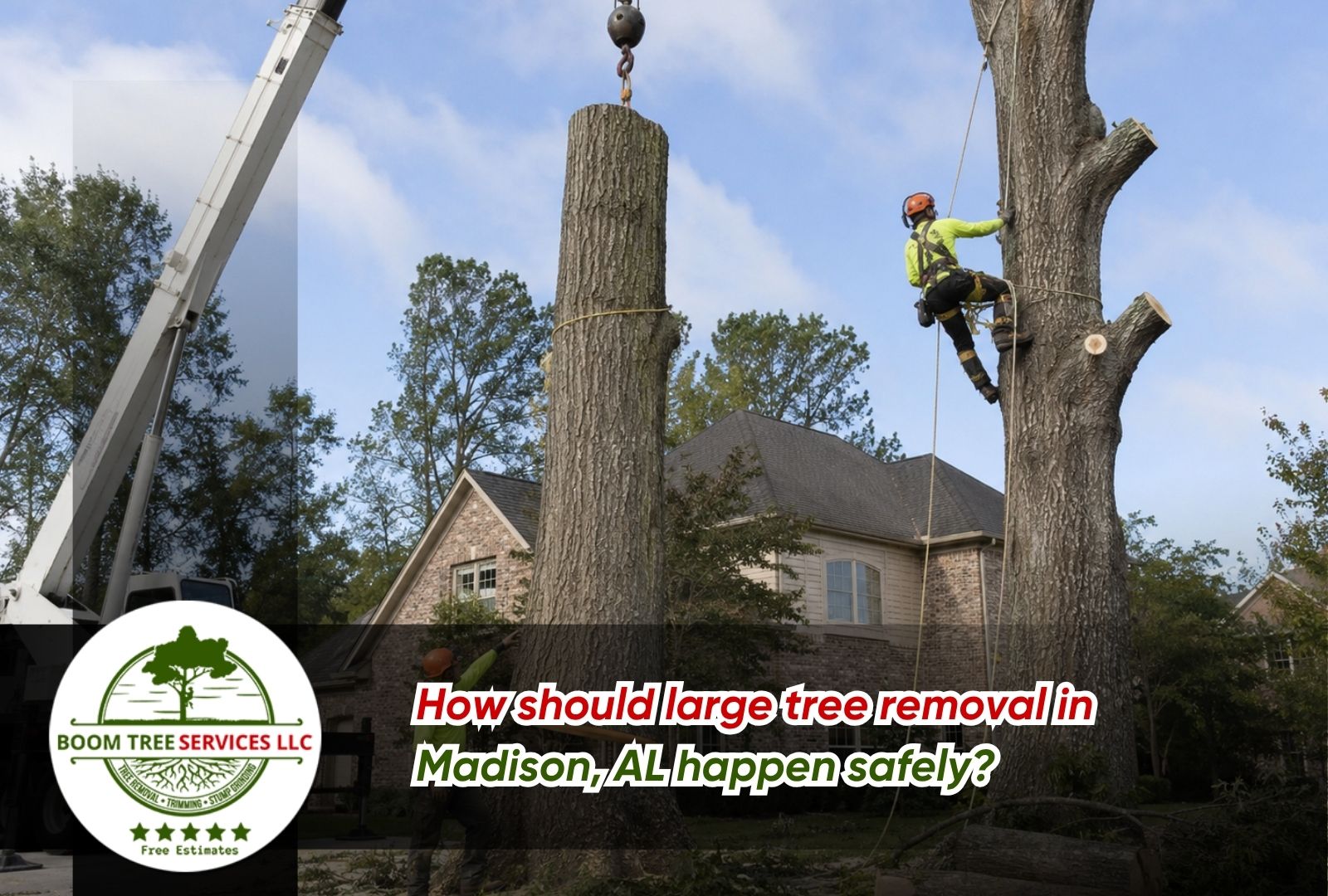
Large trees can turn from shade and beauty into a serious risk fast. In Madison, storm damage, leaning trunks, dead limbs, and root problems can threaten roofs, driveways, fences, and walkways. Knowing what to check before removal helps you protect your property and avoid unsafe cutting decisions.
How should large tree removal in Madison, AL happen safely?
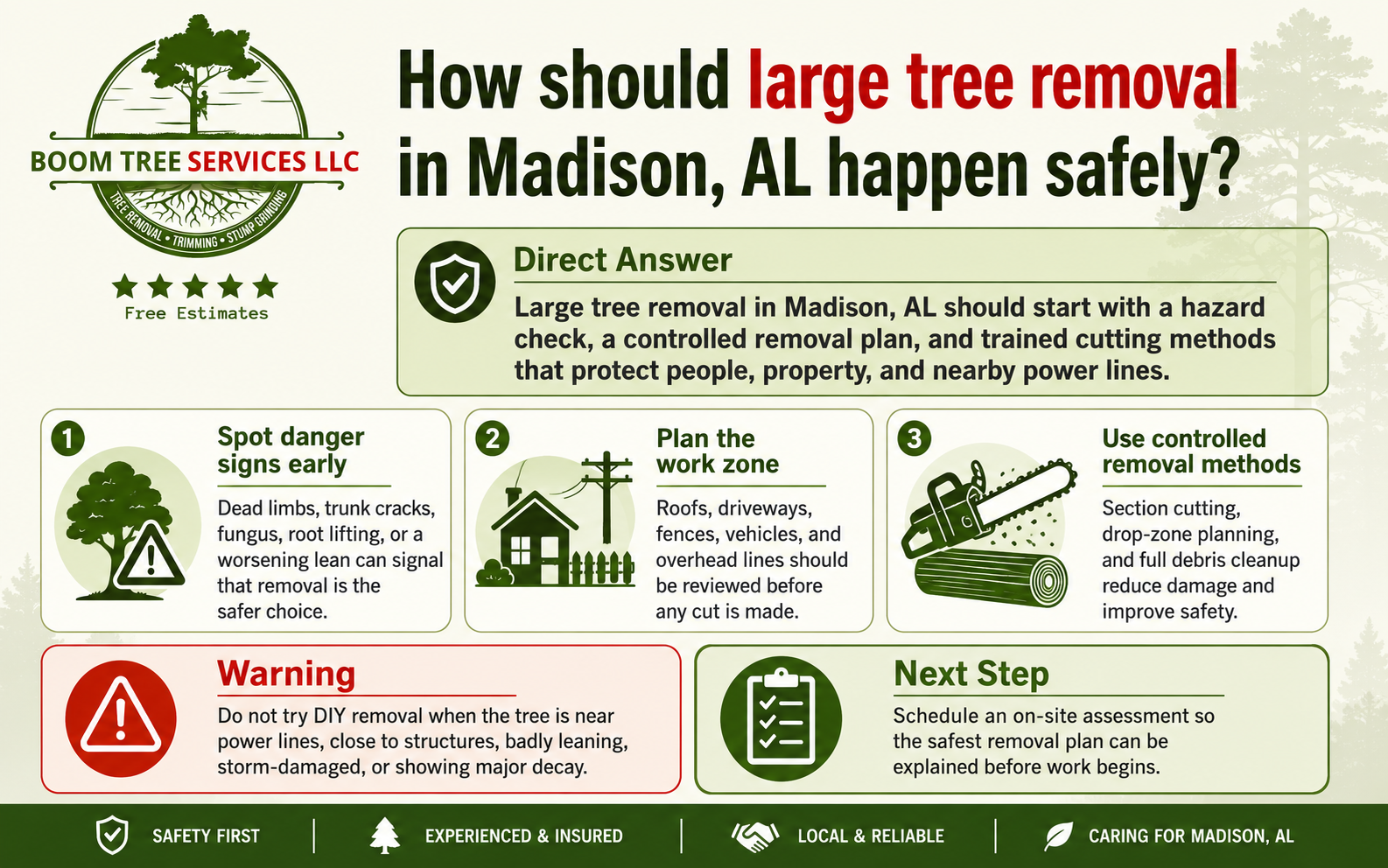
Large tree removal in Madison, AL should happen through careful inspection, risk planning, controlled cutting, and full cleanup. Homeowners should look for decay, leaning, broken limbs, and root damage before deciding whether professional removal is the safest next step.
For many homeowners, large tree removal in Madison, AL involves taking down a mature tree that has become unsafe, diseased, storm-damaged, or too close to property. It helps families prevent roof damage, blocked access, falling limbs, and yard hazards when the tree can no longer be managed safely.
Recognizing signs a large tree should come down early
Warning signs often appear before a large tree becomes an emergency. Cracks, dead limbs, mushrooms, leaning trunks, and exposed roots can show that the tree is losing strength. A careful look helps you decide when to ask for a safer review.
Many problems start small. However, small warning signs can grow quickly after heavy rain or strong wind. A tree that looks stable from one side may have decay inside the trunk or under the soil.
- Large dead branches hanging over the home or driveway
- Fungal growth near the base or on the trunk
- Fresh cracks, splits, or hollow areas in the trunk
- Roots lifting sidewalks, pavement, or nearby soil
- A lean that appears new or keeps getting worse
According to TreesAreGood, tree risk can involve people, property, and nearby targets that may be hit by falling limbs or trunks. When you notice these issues, review our guide on Tree Removal Warning Signs.
Planning large tree removal in Madison, AL with care
Safe planning protects people, structures, lawns, and nearby utilities. Before any cut happens, the work area needs a clear plan for access, drop zones, equipment, debris, and communication. This step is critical for large tree removal in Madison, AL.
At Boom Tree Services LLC, we look at the tree from the ground first. Then we consider nearby roofs, fences, vehicles, service lines, and walkways. This helps us decide if the tree needs climbing, rigging, section cutting, or other careful methods.
Power lines and nearby buildings change the whole plan. A large tree should never be cut without understanding where each branch and trunk section may move. For more practical safety guidance, visit Tree Removal Safety Tips.
OSHA notes that tree care hazards include overhead power lines, falling branches, and faulty safety equipment. These risks are why a clear work zone matters before removal begins.
Reducing risks around homes, fences, and power lines
Risk control starts with knowing what the tree can hit. Large trees near houses, fences, sheds, pools, or utility lines need careful sectioning and controlled movement. The safest plan reduces impact before any heavy wood reaches the ground.
When customers contact Boom Tree Services LLC, we ask about the tree location, nearby targets, and visible damage. Photos can help us understand the concern, but an on-site view may still be needed before work begins.
- Move vehicles and outdoor furniture away from the work area.
- Keep children, pets, and visitors inside or away from the yard.
- Mark fences, irrigation parts, lighting, or hidden obstacles.
- Tell the crew about soft ground or septic areas.
- Avoid cutting during high wind, storms, or poor visibility.
Homeowners searching how to remove large trees safely should understand one key point: large trees carry heavy loads in every limb. Controlled cuts, ropes, equipment, and clear escape areas lower the chance of damage.
Choosing a large tree removal service in Madison, AL
The right service should explain the removal plan before work starts. A large tree removal service in Madison, AL should review hazards, cleanup needs, access limits, and safe cutting options. Clear answers help you feel prepared.
With Boom Tree Services LLC, you get a team that explains the next step in simple terms. We do not expect homeowners to guess what needs to happen. Instead, we walk through the visible concerns and likely removal approach.
- Ask how the tree will be lowered or sectioned.
- Ask what cleanup is included after removal.
- Ask whether stump grinding is available.
- Ask how nearby structures will be protected.
- Ask what access the crew needs for equipment.
A clear estimate should explain the work scope, not just the final number. You can also compare service options through our Tree Care Services page.
Preparing your service visit through clear removal steps
A simple process helps the removal day feel less stressful. After you reach out, we review the concern, ask about the tree, check access, and explain what may happen next. This keeps the visit focused and safer.
Before your scheduled visit with Boom Tree Services LLC, our team may ask for the tree location, photos, and nearby obstacles. We may also ask whether the tree touches a structure, leans toward a target, or has storm damage.
- First, share the tree concern through a call or contact form.
- Next, explain what you see around the trunk, roots, and limbs.
- Then, we review access for equipment and cleanup.
- Before work begins, we explain the safest removal path.
- After removal, we clear debris based on the agreed scope.
Some trees can be removed in sections instead of one full cut. This method helps protect yards with tight spaces. To learn more, read our page on Tree Cutting Methods.
Frequently Asked Questions
How do I know if a large tree is unsafe?
A large tree may be unsafe if it has dead limbs, trunk cracks, root movement, fungal growth, or a new lean. These signs can point to decay or weak structure. You can compare warning signs on our Tree Removal Warning Signs page.
When should I call for large tree removal help?
You should call when a tree threatens a roof, driveway, fence, power line, or walking area. Early review can prevent damage before weather makes the problem worse. Use our Contact Our Tree Team page to reach us.
What happens if I try to remove a large tree myself?
DIY removal can cause serious injury, property damage, or uncontrolled falling. Large limbs can shift weight suddenly. If you are unsure how to remove large trees safely, professional help is the safer choice.
Why is section cutting used for large trees?
Section cutting lets crews remove limbs and trunk pieces in smaller parts. This approach is useful near homes, fences, and tight yards. It gives better control than dropping the full tree at once.
How do I prepare my yard before removal?
Move vehicles, patio items, toys, and garden tools away from the work area. Tell the crew about hidden lines, soft ground, or gates. You can also review Tree Removal Safety Tips before the visit.
Restoring your yard after safe removal work finishes
After a large tree comes down, cleanup helps your yard feel usable again. Logs, branches, chips, and stump options should be discussed before the work starts. When you choose Boom Tree Services LLC, we explain the cleanup steps that fit your property. Reach out through Contact Our Tree Team when your tree starts showing risk signs.