
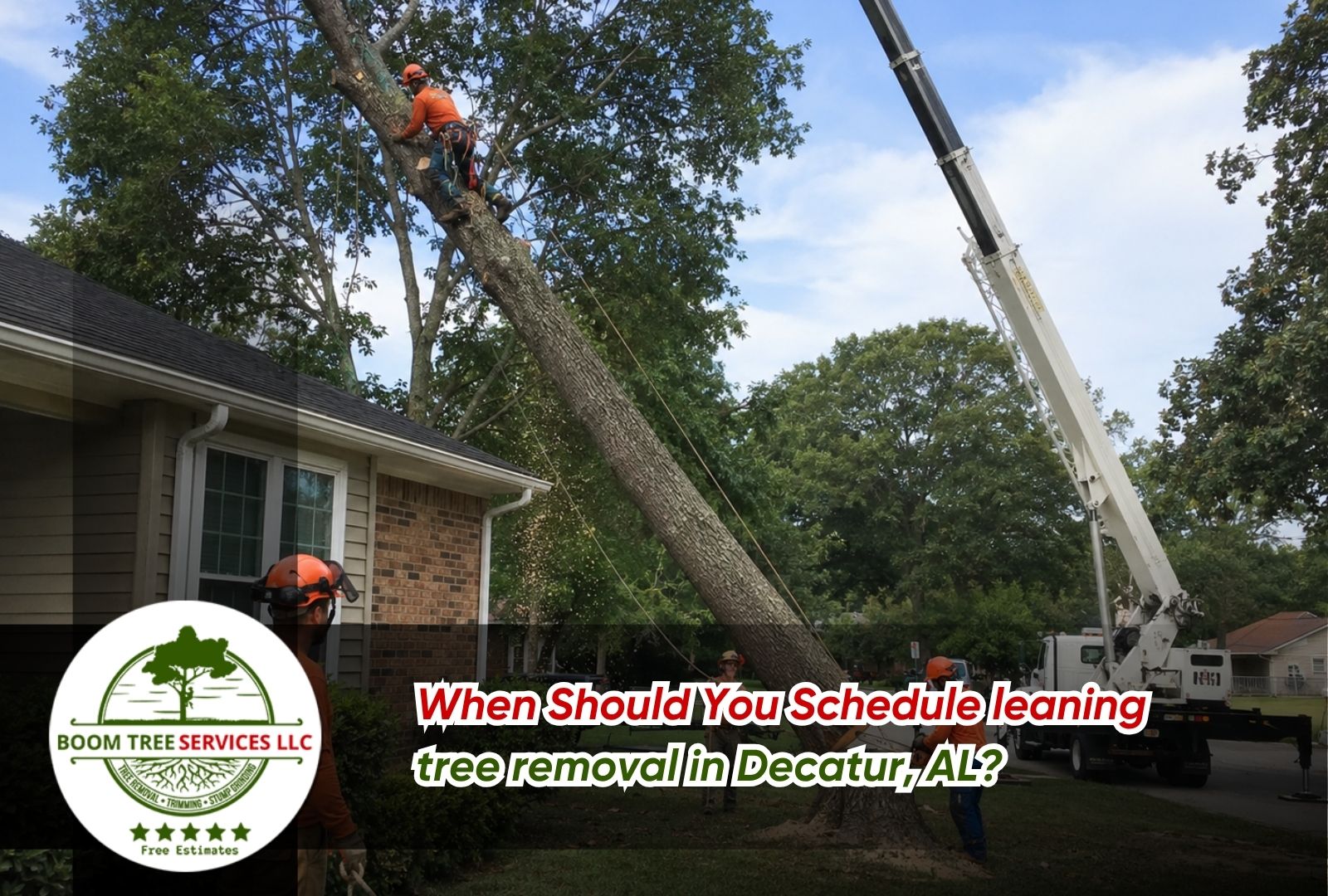
A leaning tree can look harmless until wind, wet soil, or hidden decay makes it unstable. At Boom Tree Services LLC, we help Decatur homeowners understand warning signs, inspect safely, and decide when professional removal protects people, homes, fences, driveways, and nearby utility areas.
When Should You Schedule leaning tree removal in Decatur, AL?
Schedule leaning tree removal in Decatur, AL when the tree has exposed roots, cracked soil, trunk splits, fungal growth, heavy one-sided limbs, or a growing lean near people, buildings, roads, or power lines.
Leaning tree removal in Decatur, AL means safely removing a tree that no longer stands with stable support. Homeowners need this service when roots, soil, decay, storms, or weight imbalance create risk. The service solves safety concerns before a leaning tree falls, blocks access, or damages nearby property.
Identify Leaning Tree Warning Signs Before Storm Damage
A leaning tree becomes more dangerous when the lean is new, growing, or paired with visible damage. Homeowners should check the trunk, soil, roots, canopy, and nearby targets before assuming the tree is safe.
Start with the base. Cracked soil, raised roots, or a lifted root plate can mean the tree is losing support. Also, look for bark splits, cavities, mushrooms, and soft wood near the trunk.
According to the National Weather Service Severe Thunderstorm Safety page, severe thunderstorms can produce wind gusts over 58 mph. Therefore, a weak leaning tree can fail fast during strong Decatur storms.
Boom Tree Services LLC checks the full tree, not just the visible lean. We look at the direction of fall, nearby structures, ground movement, and branch weight before recommending the safest next step.
- A fresh lean after rain or wind needs fast attention.
- Cracks near the trunk base can show root movement.
- Fungal growth may point to hidden decay.
- A heavy canopy on one side can increase pulling force.
- Branches over roofs, fences, or driveways raise the risk.
When homeowners ask when is a leaning tree dangerous, the best answer is simple. A leaning tree is dangerous when support is failing, the lean is changing, or the fall zone includes people or property.
Measure Root And Soil Clues For Safer Decisions
Roots and soil often explain why a tree leans. Wet ground, drought stress, compacted soil, construction damage, and root decay can all weaken support before the trunk shows clear signs.
To learn how to inspect a leaning tree, begin with a slow walk around the base. Then, compare the lean from several angles. This simple step helps you notice soil lifting, cracks, and uneven pressure.
Next, inspect the root flare. A healthy root flare should spread into the ground. However, a buried or damaged flare can hide stress. Our guide on root concerns around your yard explains why root issues matter for property safety.
The National Weather Service notes that hail one inch or larger is part of the severe thunderstorm definition. Since storms can bring hail, wind, and heavy rain together, weak roots may lose grip during one weather event.
| Warning Sign | What It May Mean |
|---|---|
| Raised soil near the trunk | Roots may be shifting or pulling upward. |
| New cracks in the ground | The root plate may be moving under stress. |
| Fungus at the base | Decay may be weakening the lower trunk. |
| Thin or uneven canopy | The tree may be stressed, dying, or unbalanced. |
| Lean toward a structure | The fall path may threaten people or property. |
Key Takeaway: A leaning tree needs attention when roots, soil, trunk damage, or canopy weight show stress. Early inspection helps homeowners decide before storms make the problem urgent.
Compare leaning tree removal in Decatur, AL Options Clearly
Removal options depend on tree size, access, lean direction, and nearby structures. A professional plan may use climbing, rigging, sectional cutting, or equipment support to control each cut safely.
Not every leaning tree should be cut from the ground. In tight yards, sections may need to come down piece by piece. This method helps protect roofs, fences, landscaping, and nearby driveways.
When Boom Tree Services LLC plans a removal, we review access first. Then, we explain whether the tree can be dismantled, lowered with ropes, or removed with added equipment support.
- Sectional removal works well near homes and fences.
- Rigging helps guide heavy limbs away from targets.
- Open-area felling may work when space allows.
- Stump grinding can clear the area after removal.
- Debris cleanup helps return the yard to safe use.
For more help with local service options, visit our safe local tree removal page. You can also explore our complete outdoor tree care services.
Follow Simple Inspection Steps Before Calling Professionals
A basic homeowner inspection can reveal risk, but it should never place you under a damaged tree. Stay outside the fall zone, avoid touching power lines, and call a professional if you hear cracking.
Use a phone camera, measuring tape, and a safe viewing spot. Take photos from the front, back, and both sides. Also, photograph the trunk base, roots, canopy, and nearby structures.
The U.S. Department of Labor reported that 222 landscaping and tree care workers suffered fatal workplace injuries in 2022. That data shows why hazardous tree work needs careful planning and trained crews.
- Stand away from the tree and check the full lean.
- Look for soil lifting near the root plate.
- Check for cracks, cavities, fungus, and peeling bark.
- Notice whether branches hang over roofs or wires.
- Take photos and contact a local tree professional.
If the tree also looks unhealthy, compare your observations with our tree health warning signs guide. After that, share photos when you request help.
Key Takeaway: Homeowners can document visible signs, but unstable trees need safe distance. Professional inspection is the right next step when roots, trunk damage, or nearby targets increase risk.
Plan Budget And Permit Questions With Less Stress
Planning ahead helps homeowners avoid rushed choices. Tree size, access, condition, lean direction, cleanup needs, stump work, and local requirements can all affect the removal plan and timeline.
Boom Tree Services LLC explains the job before work begins. We review the tree, the drop zone, the cleanup needs, and the best way to protect nearby property.
Some trees may need added care because of location, size, or public right-of-way concerns. Also, some neighborhoods may have rules for large trees. Therefore, ask questions before scheduling work.
Useful questions include:
- Is the tree close to a home, fence, road, or wire?
- Will the work need climbing, rigging, or equipment access?
- Should the stump be ground after removal?
- Will debris be hauled away after the job?
- Does the site need special timing after storms?
For simple planning help, review our tree project planning guide. Then, use the details to prepare clear questions for your estimate.
Frequently Asked Questions
How do I know when a leaning tree is dangerous?
A leaning tree is dangerous when the lean is new, the soil is lifting, roots are exposed, the trunk is cracked, or the tree leans toward people or structures. For local help, visit our safe local tree removal page.
When should I call a leaning tree removal service?
Call a leaning tree removal service when you see root movement, trunk decay, fungal growth, heavy one-sided limbs, or storm damage. You can contact us through our tree service contact page.
What happens if I wait too long to remove it?
Waiting can allow roots, soil, or decay to weaken further. Then, wind or rain may cause sudden failure. If the tree also shows poor health, read our tree health warning signs guide.
Why is root damage a serious leaning tree problem?
Root damage is serious because roots hold the tree upright and move water into the canopy. Damaged roots can make a lean worse. Learn more from our root concerns around your yard resource.
How do I review past tree removal work?
Review photos of completed work to understand cleanup, access, and job quality. You can view examples on our recent tree care project photos page.
Choose Safer Tree Care With Clear Local Guidance
Boom Tree Services LLC is ready to help you decide whether leaning tree removal in Decatur, AL is the safest choice for your yard. For clear guidance and a direct next step, reach us through our tree service contact page.
References
- National Weather Service Severe Thunderstorm Safety
- US Department of Labor launches program to stem fatalities, promote safe workplaces in New York, New Jersey tree, landscaping industries