
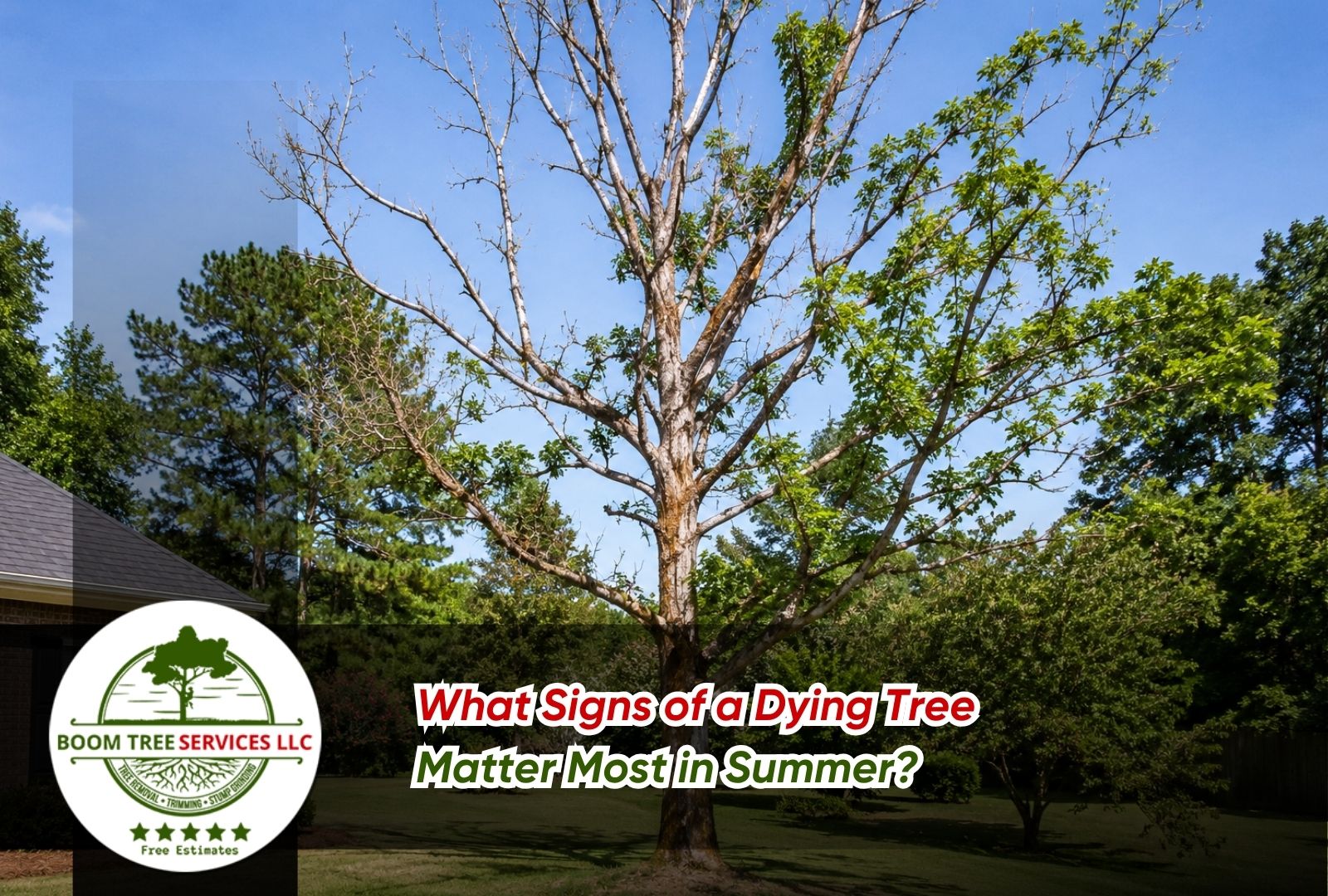
June heat can make weak trees look worse fast, especially in Alabama yards. If leaves curl, bark loosens, or branches turn brittle, do not wait for a storm to test the tree. Our Tree Services page can help you understand care options before the risk grows.
What Signs of a Dying Tree Matter Most in Summer?
Signs of a Dying Tree include early leaf drop, brittle limbs, peeling bark, fungus near roots, sparse canopy growth, and sudden leaning. In summer, these warning signs can appear faster because heat and dry soil place more stress on already weak trees.
Tree decline is the slow loss of health, strength, and growth. Homeowners need to watch for it when trees stop producing full leaves, show bark damage, or lose root support. Early checks help reduce falling limb risks and may reveal whether trimming, care, or removal is safer.
Spot Signs of a Dying Tree Before Summer Damage
Early warning signs usually appear in leaves, limbs, bark, and roots before a tree fails. At Boom Tree Services LLC, we first look for patterns that show whether the tree is stressed, diseased, drying out, or becoming unsafe near people and structures.
Common warning signs include:
- Yellow or brown leaves before fall
- Brittle branches that snap easily
- Peeling, cracked, or loose bark
- Mushrooms or fungus near the base
- New leaning or raised soil near roots
Alabama Cooperative Extension notes that drought can reduce growth, increase stress, and make trees more vulnerable to pests and disease. If these signs appear together, schedule a closer inspection before the next wind event.
Dying Tree Signs Summer Heat Reveals Across Alabama Yards
Summer heat often exposes hidden tree problems because weak roots cannot move enough water to the canopy. Dying tree signs summer conditions may reveal include curled leaves, scorched edges, dry shoots, early leaf drop, and thin shade during the growing season.
Heat stress tree dying symptoms are easier to see when one side of the canopy thins faster than the rest. In North Alabama, reflected heat from driveways, compacted lawns, and dry soil can make stress worse. With Boom Tree Services LLC, you get a practical review of visible decline and safety concerns before work begins.
Uneven canopy loss matters because it can point to root damage, pest pressure, or disease in one section of the tree.
Track June Tree Decline Signs in Alabama Home Landscapes
June tree decline signs in Alabama deserve attention because heat, fast growth demands, and dry periods can overlap. When customers contact Boom Tree Services LLC, we ask about recent leaf changes, storm damage, soil conditions, nearby construction, and where the tree stands on the property.
Use this simple decision-help list:
- Call sooner if the tree leans toward a home.
- Watch closely if only small leaves look dry.
- Request help if fungus appears with soft wood.
- Keep people away from large dead limbs.
The U.S. Forest Service describes hazard trees as trees with structural defects that may fail. That risk becomes more serious when a weak tree stands near a driveway, roof, walkway, fence, or outdoor seating area.
Compare Bark, Root, Pest, and Canopy Clues
Tree decline is easier to understand when you compare several clues instead of trusting one symptom. A few dry leaves may show short-term stress, while bark loss, root decay, pest holes, and dead limbs together can show deeper trouble.
Look at these areas during a careful ground check:
- Bark: cracks, loose sections, soft spots, or dark streaks.
- Roots: exposed roots, heaving soil, rot, or poor drainage.
- Pests: small holes, sawdust-like frass, sticky residue, or chewed leaves.
- Canopy: bare sections, small leaves, or branch dieback.
A tree with deadwood over active areas should not be ignored. Visit our Contact Us page to share what you see and ask about the next safe step.
Follow Clear Steps Before Choosing Safe Tree Work
A clear inspection process helps homeowners understand whether a tree needs care, pruning, or removal. At Boom Tree Services LLC, our crew reviews the visible condition, explains safety concerns, and helps customers decide what action fits the tree and property.
When you reach out, the process may include:
- Sharing photos and the tree’s location.
- Describing recent leaf, bark, or limb changes.
- Reviewing nearby homes, wires, vehicles, and walkways.
- Checking visible roots, trunk defects, and canopy health.
- Explaining practical options before work starts.
Safe tree decisions start with clear information. If the tree is unstable, keep people away from the area and request a professional opinion through our Tree Care Options page.
Frequently Asked Questions
Can a dying tree recover during hot summer weather?
Some stressed trees can recover when the cause is caught early, such as dry soil, poor mulch placement, or limited deadwood. Recovery is less likely when decay, root rot, or major structural damage is present. A careful inspection helps separate stress from serious decline.
What leaf changes show a tree may be dying?
Watch for leaves that yellow early, turn brown at the edges, curl, shrink, or drop before fall. One branch losing leaves while others stay full can also matter. For local help, use Contact Us to describe the pattern.
Should fungus near the trunk always worry homeowners?
Fungus does not always mean the tree is dying, but mushrooms near the trunk or root flare can signal decay. Concern rises when fungus appears with soft bark, leaning, dead limbs, or thinning leaves. Ask about Tree Assessment Services before assuming the tree is safe.
When is a leaning tree considered a safety risk?
A tree that suddenly leans, leans more after a storm, or lifts soil around the base may be unsafe. The concern grows when the tree points toward a home, road, fence, or play area. Keep distance from the trunk until it is checked.
Who should I contact after noticing dead branches?
Dead branches can fall without much warning, especially during storms or high winds. When property owners call Boom Tree Services LLC, we explain what details help us understand the risk. You can start through Schedule Tree Help and share photos when available.
Protect Your Yard With Earlier Tree Health Decisions
Acting early helps protect people, roofs, vehicles, and the healthy trees nearby. If Signs of a Dying Tree appear in your yard, compare leaves, bark, roots, canopy, and lean before the next storm. For helpful guidance, start with our Contact Us page and ask what information to send.