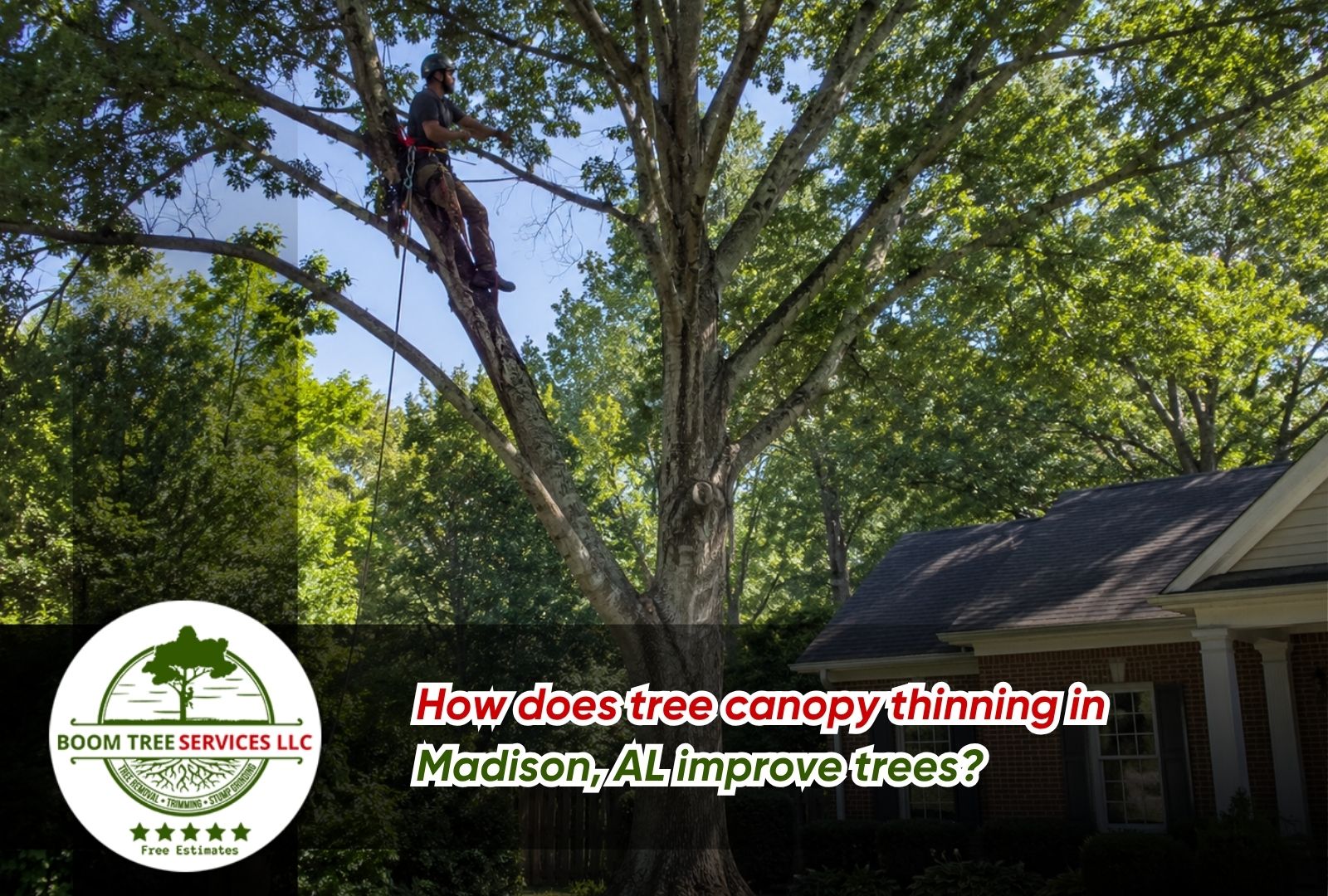
Overgrown crowns can make Madison yards darker, heavier, and more exposed during storms. With the right cuts, tree canopy thinning in Madison, AL can open the crown while keeping the tree’s natural shape, shade, and long-term strength.
How does tree canopy thinning in Madison, AL improve trees?
Tree canopy thinning in Madison, AL improves trees by removing selected interior branches, reducing limb weight, increasing airflow, and allowing filtered sunlight through the crown without changing the tree’s natural shape.
For many property owners, canopy thinning is a careful tree care method that removes crowded, weak, or crossing branches from the crown. Homeowners, property managers, and HOAs may need this service when trees look too dense, block light, trap moisture, or carry heavy limbs that could fail during wind or rain.
Tree canopy thinning in Madison, AL protects healthy growth
Dense tree crowns can hold extra weight, limit airflow, and hide weak limbs. Proper thinning removes selected branches so the tree keeps its shape while gaining better balance, stronger structure, and a healthier growing space.
At Boom Tree Services LLC, we look at branch spacing, limb weight, crown density, and nearby targets before making cuts. This helps protect homes, driveways, fences, and outdoor areas from avoidable branch problems.
- More filtered sunlight reaches grass, shrubs, and lower branches.
- Better airflow helps reduce trapped moisture in the crown.
- Less limb weight can lower stress on long or crowded branches.
- Cleaner branch spacing supports a more natural tree form.
Tree canopy thinning in Madison, AL should never remove too much growth at once. A careful plan protects the crown while solving the problem that made the service necessary.
Selective branch removal increases light, airflow, and balance
Canopy thinning works best when cuts are small, planned, and focused on branch structure. The goal is not to strip the tree. The goal is to let air and light move through the crown while keeping healthy limbs in place.
Homeowners often ask what is canopy thinning because the process can sound broad. In simple terms, it is the selective removal of small branches inside the crown. The service helps reduce crowding without cutting the tree into an unnatural shape.
Our team checks for rubbing limbs, dead tips, weak attachments, and branches growing toward roofs or walkways. Then we explain which cuts make sense and which areas should stay untouched.
- Remove dead, broken, or weak interior branches.
- Open crowded areas without overexposing the trunk.
- Keep strong limbs that support the tree’s structure.
- Review the crown after the first round of cuts.
According to TreesAreGood.org, pruning must be done with an understanding of tree biology because poor cuts can create lasting damage. That is why proper cut placement matters during every canopy thinning visit.
Canopy thinning vs topping preserves safer tree structure
The difference between canopy thinning vs topping is simple. Thinning removes selected small branches from the crown, while topping cuts large branches back harshly. Topping can weaken trees, create decay points, and cause weak regrowth.
With Boom Tree Services LLC, you get clear guidance before work begins. We explain why topping is risky and why careful thinning is usually a better choice for healthy trees that need less weight or better airflow.
- Canopy thinning: keeps the natural crown shape.
- Topping: removes large upper limbs in a harsh way.
- Canopy thinning: targets crowded or weak branches.
- Topping: can lead to weak shoots and future hazards.
Penn State Extension notes that proper pruning can improve tree health, structure, beauty, and value. Topping does the opposite when large cuts expose trees to stress and decay.
Careful cuts support wildlife and local neighborhood biodiversity
Trees provide food, shelter, shade, and travel paths for birds, insects, and small animals. Thoughtful thinning keeps enough cover in place while opening crowded branches that can reduce tree health over time.
Madison yards often include mature shade trees near homes, lawns, patios, and fences. Removing every dense area can harm habitat, but leaving too much crowded growth may create safety concerns.
When customers contact Boom Tree Services LLC, we review the tree’s condition and nearby use areas. We avoid removing healthy branches without a clear reason. This keeps the service focused, practical, and respectful of the landscape.
Healthy canopy management helps trees remain useful to people and wildlife. It also supports cooler outdoor spaces, better shade, and stronger neighborhood tree cover.
Detailed inspections reveal branch risks before storms arrive
Storms can expose weak limbs, crowded branch unions, and hidden decay. A careful inspection helps find these concerns before heavy rain or wind turns a branch issue into property damage.
A professional tree trimming service in Madison, AL should inspect more than the outer shape. The crew should look for cracks, deadwood, decay, overextended limbs, roof clearance problems, and branches close to service lines.
For homeowners who call Boom Tree Services LLC, we ask about recent storm damage, falling limbs, blocked sunlight, and areas where branches feel too close to the home. Photos can also help us understand the concern before the visit.
- Dead limbs that could fall without warning.
- Crossing branches that rub and create wounds.
- Heavy outer growth that pulls limbs downward.
- Dense interior areas that limit light and airflow.
Tree canopy thinning in Madison, AL can reduce certain risks, but it cannot fix every tree problem. If a tree is badly damaged, unstable, or diseased, another service may be safer.
Simple booking steps prepare your property for service
Clear service steps help homeowners know what to expect before any cutting begins. The process starts with a conversation, continues with a site review, and ends with explained recommendations that fit the tree’s condition.
Before Boom Tree Services LLC begins work, we listen to your concern and check the tree’s location. We may ask about access, nearby structures, recent limb drops, and the main reason you want thinning.
- Call, message, or use the contact page.
- Share the tree location, concern, and safe photos when possible.
- Let us inspect the crown, trunk, limbs, and work area.
- Review the recommended cuts before work begins.
- After service, check the area and ask care questions.
During the visit, our crew focuses on safe work zones, clean cuts, and a balanced crown. For related care, read our tree trimming and pruning guide.
Frequently Asked Questions
How do I know if my tree needs canopy thinning?
Your tree may need thinning if the crown looks crowded, sunlight cannot pass through, branches rub together, or limbs feel too heavy over your yard. A visit from a local tree care service can help confirm the safest option.
When should I choose thinning instead of topping?
Choose thinning when the tree is healthy but crowded, heavy, or poorly balanced. Topping should be avoided because it cuts large limbs harshly. Learn more in our tree trimming versus pruning guide.
What happens if too many branches are removed?
Removing too many branches can stress the tree, expose bark to sun damage, and reduce food production. A balanced approach keeps enough leaves in place for recovery, shade, and healthy growth.
Why is airflow important inside a tree canopy?
Airflow helps reduce trapped moisture, supports healthier leaves, and lowers some branch stress during wind. Better airflow also helps the crown dry more evenly after rain.
How often should tree crowns be inspected in Madison?
Most trees should be checked after major storms and during regular property care. For ongoing guidance, our tree maintenance guide explains helpful steps for safer, healthier trees.
Thoughtful canopy care keeps Madison yards safer longer
Healthy trees need the right cuts at the right time. When your crown looks crowded, heavy, or unsafe, schedule a review through our contact page. We will explain practical options before the damage gets worse.