
Summer heat and sticky air can turn small tree problems into fast canopy decline. If leaves wilt, spots spread, or limbs die back, Tree Diseases Guide can help you understand the warning signs before you request a closer inspection.
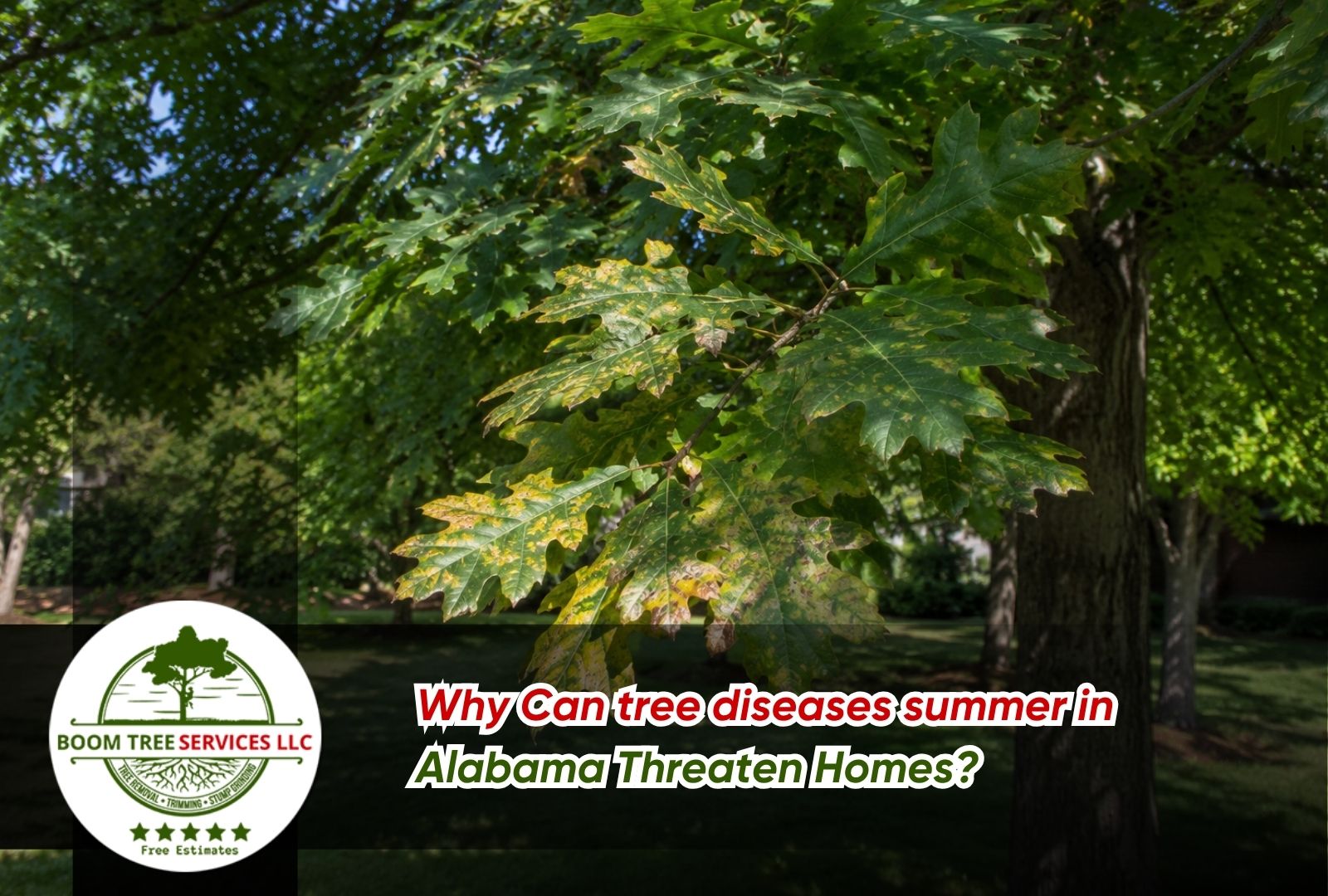
Why Can tree diseases summer in Alabama Threaten Homes?
tree diseases summer in Alabama can threaten homes when heat, humidity, wounds, and stressed roots allow fungi or vascular diseases to spread. Early inspection, careful pruning, and timely tree disease treatment help reduce damage before weak limbs, leaf loss, or decline become harder to manage.
Summer tree disease care includes checking leaves, bark, branches, roots, and soil conditions for signs of infection. Homeowners need this service when trees show spots, wilting, dieback, mushrooms, or sudden canopy thinning. The goal is to find the cause and choose safe next steps before damage spreads.
Preventing tree diseases summer in Alabama Safeguards Healthy Canopies
Summer disease prevention starts with reducing stress around the tree. Heat, drought, mower wounds, compacted soil, and overwatering can weaken natural defenses. At Boom Tree Services LLC, we look for patterns that show whether symptoms are disease-related, site-related, or linked to both.
Healthy care habits matter because many pathogens enter through weak tissue or open wounds. For example, Tree Trimming and Pruning Guide explains why careful trimming supports safer growth. Alabama Cooperative Extension System notes that Alabama has at least 40 oak species, so oak care is a common local concern.
- Water deeply, but avoid soaking the trunk.
- Keep mulch off the root flare.
- Avoid summer pruning on stressed oaks.
- Watch for early leaf drop after storms.
Spotting Oak Wilt Alabama Summer Symptoms Protects Nearby Trees
Oak wilt Alabama summer symptoms often appear as quick leaf discoloration, wilting, branch dieback, and canopy thinning. The disease can move through water-conducting tissue, so fast attention matters. With Boom Tree Services LLC, customers get guidance focused on visible symptoms and safer next steps.
Leaves may turn dull green, bronze, brown, or scorched from the edge inward. Sometimes symptoms show on one side first, especially near wounds. Fresh cuts in summer can increase risk because insects may reach exposed tissue. If an oak declines quickly, avoid moving suspect wood without proper guidance.
- Leaf bronzing or browning from the margins.
- Wilting shoots in the upper canopy.
- Dark streaks under bark on affected limbs.
- Fast decline after pruning or storm damage.
Managing Anthracnose Tree Disease Limits Summer Leaf Damage
Anthracnose tree disease usually affects leaves, shoots, and small twigs. It often causes irregular spots, curled leaves, blotches, and early defoliation. University of Minnesota Extension describes anthracnose as a group of diseases that affect many deciduous trees and shrubs.
In Alabama summer conditions, anthracnose can look worse when a tree already struggles with heat or poor airflow. Spots may join together, making leaves look burned or ragged. We check whether damage is limited to leaves or whether twigs and branches also show active dieback.
Good cleanup helps because infected leaves and debris can hold spores. Raking fallen leaves, improving air movement, and avoiding overhead watering can reduce moisture on leaf surfaces. When symptoms keep spreading, tree disease treatment may include pruning, sanitation, or product options based on the tree and site.
Reducing Fungal Risks During Hot Humid Alabama Weather
Fungal tree disease hot humid Alabama weather becomes more likely when leaves stay wet and roots stay stressed. Warm air, shade, and poor airflow help spores survive. Therefore, simple site changes can reduce disease pressure without overcomplicating tree care.
Look for powdery coatings, leaf spots, cankers, mushrooms, soft bark, or thinning crowns. Root problems may show above ground as yellowing leaves or weak growth. Our team checks the trunk base, canopy, soil moisture, and branch structure because one symptom rarely tells the full story.
- Leaf disease signs: spots, curling, blotches, or powder.
- Bark disease signs: cankers, cracks, or sunken areas.
- Root disease signs: mushrooms, leaning, or soft root collars.
- Stress signs: scorch, thinning, or poor new growth.
Choosing Tree Disease Treatment Supports Safer Summer Decisions
Tree disease treatment should match the cause, the tree species, and the level of risk. Some problems improve with pruning and better care, while others need closer diagnosis. Boom Tree Services LLC can discuss visible symptoms without making unsupported promises about recovery.
For fungal issues, treatment may include removing infected limbs, cleaning debris, improving soil conditions, or using labeled products when appropriate. For severe decline, safety becomes the first concern. If a diseased tree has already been removed, Stump Grinding in Huntsville AL may help reduce leftover trip hazards and improve the area.
Never treat every brown leaf as a disease. Summer scorch, drought, mower damage, and compacted soil can mimic infection. A careful review helps separate normal seasonal stress from problems that need faster action.
Booking A Summer Tree Disease Inspection Clarifies Next Steps
An inspection helps connect symptoms with likely causes. When customers contact Boom Tree Services LLC, we ask what changed, when symptoms started, and whether storms, pruning, digging, or watering changes happened recently. Clear details help us focus the review.
During the appointment, we may look at the canopy, trunk, root flare, nearby trees, and surrounding soil. Before work begins, we explain practical options and safety concerns. To request help, use Contact Us Today for Professional Tree Services.
- Share photos and describe the symptoms.
- Tell us when the problem first appeared.
- Point out recent pruning, storms, or soil changes.
- Review recommended care, cleanup, or treatment steps.
Frequently Asked Questions
What causes summer tree diseases to spread in Alabama?
Heat, humidity, wet leaves, wounds, and stressed roots can help diseases spread. Many fungi need moisture to grow, while weak trees have less energy for recovery. For a deeper symptom guide, visit Tree Diseases Guide.
When should oak wilt symptoms receive professional attention?
Oak wilt symptoms need attention when leaves discolor quickly, branches wilt, or decline appears after pruning or storm wounds. Fast changes can affect nearby oaks. During a diagnosis at Boom Tree Services LLC, we focus on visible risk and practical next steps.
Can anthracnose tree disease kill a healthy tree?
Anthracnose tree disease often causes leaf damage more than immediate death. However, repeated defoliation, poor soil, drought, or other stress can weaken a tree. Better watering, cleanup, and Tree Trimming and Pruning Guide practices may support recovery.
Should diseased branches be removed during humid summer weather?
Diseased branches may need removal when they are dead, weak, or spreading infection. However, timing and method matter, especially on oaks. Avoid unnecessary cuts during high-risk periods and ask for guidance before making large pruning decisions.
Do fungal tree problems always need chemical treatment?
No, fungal tree problems do not always need chemical treatment. Some improve with pruning, debris cleanup, airflow, and soil care. When symptoms keep spreading, use Contact Us Today for Professional Tree Services to discuss inspection options.
Starting Healthier Summer Tree Care Prevents Bigger Damage
tree diseases summer in Alabama are easier to manage when warning signs are checked early. With Boom Tree Services LLC, you can share symptoms, ask about treatment options, and decide the safest next step for your property. For help with a concerned tree, start with Contact Us Today for Professional Tree Services.