
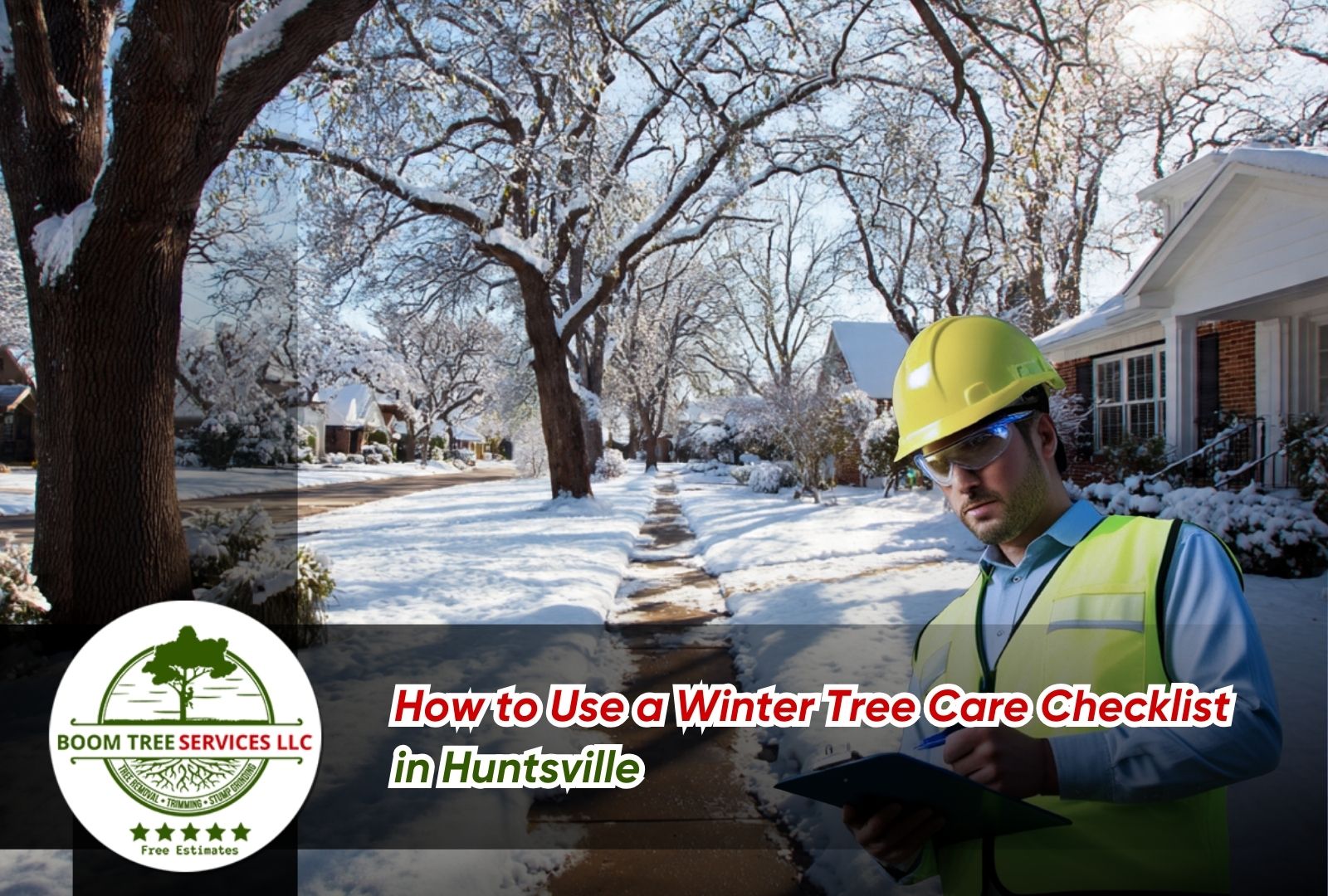
Preparing your trees for cold Alabama weather doesn’t have to be overwhelming. With a clear plan, you can prevent cracked trunks, broken branches, and costly hazards. This Winter Tree Care in Huntsville Checklist walks you through seasonal prep, storm readiness, and recovery steps so your landscape stays safer, healthier, and ready to bounce back when spring returns in North Alabama.
How to Use a Winter Tree Care Checklist in Huntsville
Start with this Winter Tree Care in Huntsville Checklist as your seasonal roadmap. Review year-round maintenance, then focus on winter tasks like mulching, pruning hazards, checking soil moisture, and planning post-storm inspection. By following each step in order, you reduce risk, protect property, and help your trees recover faster after freezing weather.
Year-Round Tree Care: Laying the Groundwork for Winter
Before winter hits, healthy trees depend on what you do in every season. A consistent routine builds strong roots and structure so storms, cold snaps, and ice cause less damage. Think of seasonal care as insurance: by checking growth, moisture, and structure now, you reduce emergencies when weather becomes unpredictable.
Spring Tree Care
Spring is ideal for inspecting trees after winter and preparing them for growth. Prune broken or dead branches to limit pests and disease. Refresh mulch to help soil hold moisture as temperatures climb. Prioritize early detection of problems so trees enter summer strong instead of stressed.
Summer Tree Care
Southern summers can strain even established trees. Water deeply but infrequently to encourage roots to grow down, not stay near the surface. Watch for yellowing leaves, wilting, or early leaf drop, which may signal pests, disease, or drought stress that could make winter damage more likely.
Fall Tree Care
Fall is your last chance to prepare trees before cold weather. Clear fallen leaves from trunks to reduce fungal issues. Inspect for pests and remove dead or diseased limbs. This is a smart time to schedule tree trimming in Huntsville, AL so weak branches are gone before storms arrive.
Winter Tree Care
Even in Huntsville’s relatively mild winters, sudden frosts and occasional ice can be rough on trees. Wrap young or thin-barked trunks to reduce sunscald and frost cracks. Maintain a protective mulch ring to insulate roots from temperature swings, and check regularly for storm-broken branches.
Understanding Huntsville’s Winter Climate
Huntsville usually sees mild to moderate cold, with average lows in the 30s and frequent frost on clear nights. Ice events with sleet or freezing rain can load branches and increase breakage risk. Rapid temperature changes from warm days to freezing nights may crack bark and stress tissues.
Your property may also contain microclimates caused by shade, pavement, or nearby buildings. Trees in low spots or windy corners may face more cold stress, while those near walls or foundations stay slightly warmer. Use this knowledge to decide which trees need added winter protection.
Preparing Trees for Winter Weather
As late fall approaches, walk your yard and prepare trees before the first hard freeze. These simple steps reduce surprise failures when storms hit.
- Clean up fallen leaves and debris at the base of trees to limit overwintering pests and disease.
- Check soil moisture and provide one last deep watering so roots enter dormancy hydrated.
- Inspect young or thin-barked trunks for sunscald risk and apply breathable tree wrap where needed.
- Shield sensitive trees with burlap screens in windy or exposed areas.
- Remove or loosen old ties and wires so they don’t girdle trunks as bark contracts.
Protecting Trees from Freeze Damage
Thoughtful planning goes a long way toward preventing the kind of freeze damage trees often suffer during sudden cold snaps. Start with species selection and site conditions, then add protection when extreme cold is in the forecast.
- Choose hardy species suited to North Alabama and plant them in well-drained soil, away from standing water.
- Use raised beds or gentle slopes to improve drainage and limit root injury during freezes.
- Apply anti-desiccant spray on evergreens in fall to reduce moisture loss in cold, dry winds.
On nights when deep freezes are predicted, cover young or tender trees with frost cloth or light blankets secured to the ground. Avoid plastic coverings that can trap moisture against foliage. Move potted trees into garages or near foundations where temperatures stay a bit higher.
Dealing with Ice-Covered Limbs
When an ice storm coats branches, it’s tempting to intervene immediately. However, striking or shaking ice storm limbs can cause them to snap. A patient approach usually keeps more wood intact and protects your safety.
- Do not knock ice off frozen branches; let sun and rising temperatures melt most of it naturally.
- If icicles form where people walk, gently sweep them off with a long-handled broom, working from the trunk outward.
- Stay off ladders and avoid walking under heavily loaded limbs until ice begins to soften.
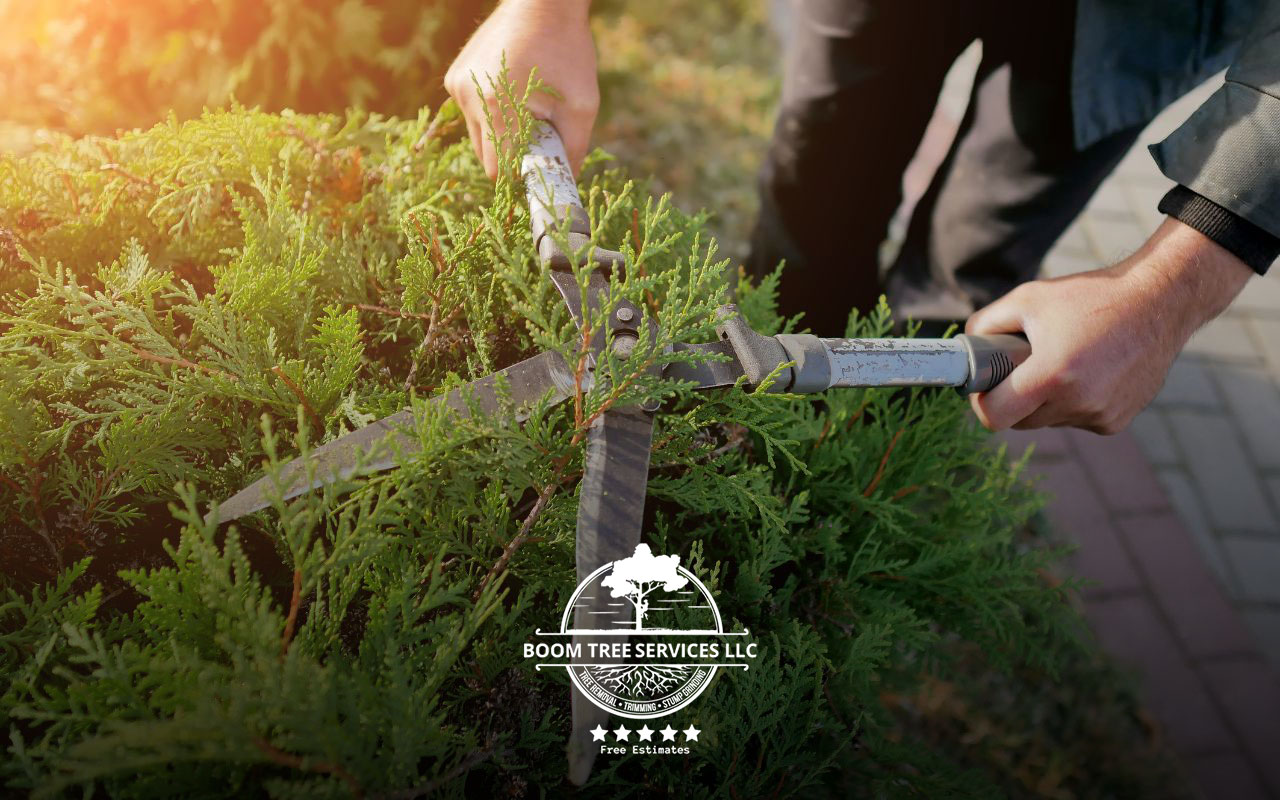
Once conditions improve, prune broken or badly bent branches using clean, sharp tools. Make cuts just outside the branch collar so trees can seal wounds efficiently.
Inspecting Trees Post-Storm
A careful post-storm inspection within a day or two helps you catch structural problems early. Treat this as a routine safety check anytime strong winds, snow, or ice hit your property.
- Walk around each tree, looking for split bark, hanging limbs, and signs of root upheaval.
- Wear gloves and eye protection to shield yourself from sharp, broken wood.
- Note cracks, torn wood, or cavities that might invite insects or decay.
- Photograph damaged areas so you can monitor changes or share them with a professional.
A thoughtful post-storm inspection also reveals when trees are beyond saving. In those cases, arranging same-day tree removal in Huntsville may be the safest way to protect nearby structures and people.
Mulching Techniques for Winter
Mulch is one of the easiest tools you have for year-round tree health, especially as temperatures swing up and down. Used correctly, it insulates roots, conserves moisture, and improves soil over time.
- Spread a 2- to 4-inch layer of organic mulch such as shredded bark, wood chips, or composted leaves.
- Keep mulch about 6 inches away from the trunk to prevent rot and discourage insects and rodents.
- Aim for a wide, even ring under the canopy and avoid tall “volcano” piles against the bark.
In early spring, gently pull mulch back to check for pests or fungal growth and refresh thin areas. Healthy mulch rings are a simple way to stabilize soil temperatures around roots year-round.
Pruning Dos and Don’ts in Winter
Dormant-season pruning can make trees safer and easier to maintain. With leaves gone and insect activity low, it’s easier to see structure and make clean cuts that heal well.
- Prioritize removing dead, damaged, or crossing branches that rub and create wounds.
- Thin crowded areas slightly to improve light penetration and reduce weight on major limbs.
- Make cuts at branch collars or outward-facing buds to support strong, natural growth.
Avoid over-pruning or “topping,” which produces weak sprouts and long-term structural issues. If you are unsure how much to remove safely, consult a certified arborist before making large cuts.
Identifying Signs of Winter Damage
Regular monitoring helps you spot winter problems before they compromise the entire tree. Many warning signs appear gradually as weather shifts from cold to warm.
- Look for bark cracks, dead patches of foliage, or fungal growth at the base of trunks.
- Watch for bent or drooping branches that may hide internal damage.
- Tap suspect limbs gently; hollow or extremely brittle wood may indicate decay.
When you find damaged areas, prune back to healthy wood and continue watching through early spring. New growth will show which sections recovered and which may still need attention.
Implementing Winter Watering Practices
Even while trees are dormant, roots still need occasional moisture. Dry winter soil can worsen cold injury and make it harder for trees to leaf out vigorously in spring.
- On days above freezing, water slowly around the drip line so moisture can reach deeper roots.
- Prioritize newly planted or drought-sensitive trees, which dry out faster than mature specimens.
- Check soil several inches down; if it feels dry, a deep watering is helpful.
Thoughtful winter watering, paired with mulch, keeps root zones from drying and supports strong growth once temperatures rise again.
How to Complete Your Winter Tree Checklist
To keep your seasonal tasks simple, turn this guidance into a repeatable routine you can use every year. This is where your Winter Tree Care in Huntsville Checklist becomes truly practical.
- Review year-round notes from spring, summer, and fall inspections for each tree.
- Walk your property before the first freeze to clear debris and check soil moisture.
- Install wraps, burlap screens, and mulch rings on vulnerable or newly planted trees.
- Monitor forecasts and protect high-risk trees before extreme cold or ice storms.
- Perform a careful post-storm inspection and document all visible damage.
- Schedule professional pruning or removal if you see major structural issues.
Frequently Asked Questions
When should I call a professional after winter storm damage?
Call an expert if you see hanging branches, trunk cracks, or trees leaning toward structures. Significant hazards often require specialized equipment. If you are unsure, contact our Huntsville tree care team for a safety-focused assessment.
Can I prevent ice from breaking large limbs in the future?
You can’t stop every storm, but you can reduce risk by pruning weak branches, maintaining healthy root systems, and choosing better-suited species. Before next winter, consider scheduling tree trimming in Huntsville, AL to improve structure.
How do I tell if a winter-damaged tree can be saved?
Trees with minor twig loss or small branch breaks often recover. Signs that removal may be safer include deep trunk splits, uprooted root balls, or major limbs lost on one side. A certified arborist can recommend pruning, cabling, or removal based on what they find during inspection.
What should I do if freezing weather is suddenly forecast?
Water the root zones if soil is dry, add extra mulch where needed, and cover young or tender trees with frost cloth or blankets that reach the ground. Bring potted trees indoors or into a garage when possible to limit sudden freeze damage.
Is winter a good time to schedule tree removal?
Yes, winter can be an efficient time for removal because many trees are dormant and access may be easier. If a tree is clearly unsafe or already failing, arranging same-day tree removal in Huntsville helps protect nearby buildings, vehicles, and people.
Embracing Winter Tree Care Success
Successful winter tree care blends year-round attention with timely action when storms approach. By following this Winter Tree Care in Huntsville Checklist, you strengthen roots, reduce hazards, and keep your landscape looking cared-for in every season. When situations feel complex or risky, partnering with a trusted local tree service keeps both your trees and your property safer.
References
- Protect Your Trees from Storm Damage: 6 Must-Know Tips – Better Homes & Gardens.
- Why You Should Keep Watering Trees in Winter – Better Homes & Gardens.