
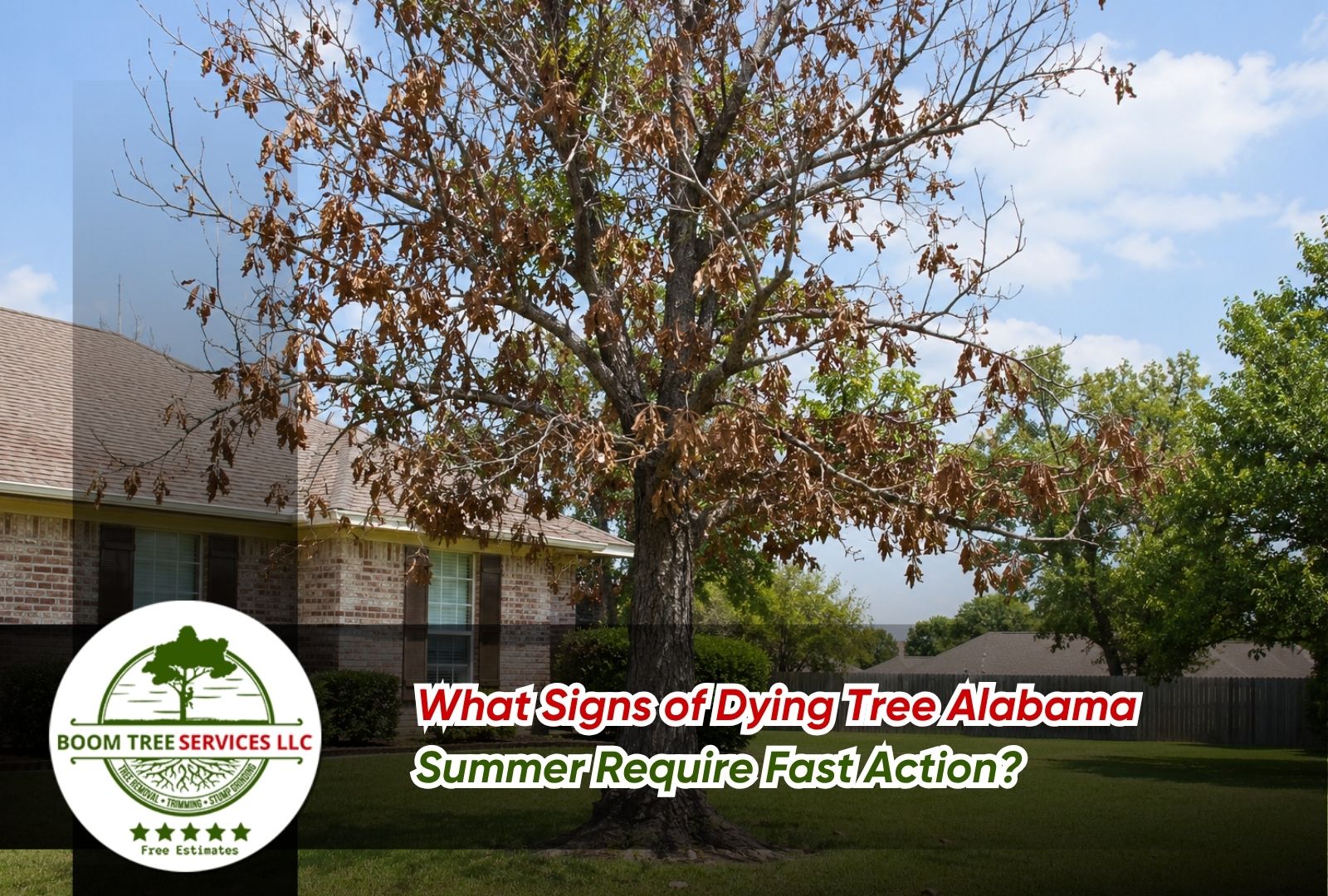
At Boom Tree Services LLC, we know Alabama summer can reveal tree problems fast. Heat, storms, pests, and hidden decay can turn one weak tree into a property risk. Therefore, our tree safety warning signs can help you protect your home before the next storm.
What Signs of Dying Tree Alabama Summer Require Fast Action?
Signs of dying tree Alabama summer include brown leaves in June, peeling bark, dead branches, fungal growth, hollow trunks, root movement, and a new lean. Homeowners should compare the tree with nearby healthy trees and request a safe review when several warning signs appear together.
Signs of dying tree Alabama summer means visible tree changes that appear during hot months, such as brown leaves, loose bark, dead limbs, root movement, or fungus. Homeowners, landlords, and property managers need this knowledge because early clues can prevent falling limbs, unsafe trunks, and costly storm damage.
Brown Leaves Reveal Signs of Dying Tree Alabama Summer
Brown leaves in June matter when nearby trees of the same type stay green. However, one hot week does not prove a tree is dying. At Boom Tree Services LLC, we compare leaf color, crown density, twig flexibility, and site conditions before recommending next steps.
Many homeowners search brown leaves in June tree dying Alabama after a hot, dry stretch. However, broad crown browning, curled leaves, and dry leaves that stay on limbs can point to deeper stress.
According to Alabama Cooperative Extension, drought damage in trees may take one to two years to fully appear. Therefore, early summer signs deserve attention, even when the tree still has some green leaves.
- Compare the weak tree with the same species nearby.
- Check whether leaves curl, scorch, or stay stuck on limbs.
- Look for thinning at the top and branch ends.
- Take photos every week during dry spells.
Loose Bark Exposes Deeper Decay and Pest Problems
Loose bark is serious when it exposes dry, dark, soft, or crumbly wood. Also, bark loss paired with brittle branches can mean the protective outer layer failed. We check the trunk, branch collars, and exposed wood before explaining whether pruning, monitoring, or removal is safer.
Bark falling off tree symptoms Huntsville property owners notice may come from disease, insects, sun injury, or decay. However, small natural shedding is different from large bare patches with cracks.
A tree with missing bark and brittle limbs may have lost living tissue in that area. Therefore, avoid cutting into the trunk yourself, because extra wounds can invite more decay.
For more context, review our health guide before deciding what to watch next.
Key Takeaway: Brown leaves and loose bark matter most when they spread, repeat, or appear with other stress signs.
Hollow Trunks Show Hidden Weakness During Summer Storms
Hollow trunks can stay alive, yet they may lose strength inside. Therefore, the outer shell, limb weight, lean, and nearby targets matter. If a hollow area sits near a house, driveway, or play space, the tree deserves a careful risk review.
Common hollow tree dangerous signs Alabama homeowners should notice include large cavities, soft wood, mushrooms near the base, cracks, and heavy limbs above the hollow section.
The National Weather Service lists Huntsville’s 1991–2020 normal high at 89.1°F in June and 91.5°F in July. So, heat stress can build fast before storms add wind pressure.
- Watch: A small opening with healthy bark around it.
- Act soon: A large cavity with soft wood or mushrooms.
- Stay away: A hollow trunk with a new lean or cracks.
Dead Branches Identify Canopy Decline and Falling Limb Risk
Dead branches across the canopy show that part of the tree is no longer moving water well. Also, dead limbs can break during wind or heavy rain. At Boom Tree Services LLC, we look for branch size, attachment points, and targets below the canopy.
One dead limb may follow a storm, but many bare limbs across the crown suggest wider decline. Therefore, check the canopy when the tree should be full of summer leaves.
Alabama Cooperative Extension notes that a full-grown pecan tree can use nearly 200 gallons of water on a hot summer day. Because water demand is high, drought stress can expose weak roots and branches.
If dead limbs hang over a roof, fence, driveway, or parked car, consider our removal planning for a safer next step.
Key Takeaway: Hollow trunks and dead branches become urgent when they stand over people, cars, homes, or walkways.
Root and Fungal Problems Confirm Serious Structural Concerns
Root problems often explain leaf loss, sudden lean, fungal growth, and weak upper branches. Because roots anchor the tree and move water, damage below ground can become a safety concern above ground. Early inspection helps separate normal mushrooms from decay signs.
Raised soil, soft ground, cracked soil, exposed roots, and mushrooms around the root flare can signal hidden trouble. However, one mushroom in the lawn does not always mean failure.
Alabama Cooperative Extension explains that about 90 percent of tree water use is lost through transpiration. Therefore, root damage can quickly affect leaves, limbs, and canopy density.
At Boom Tree Services LLC, we inspect the base, root flare, trunk soundness, and nearby targets. Then, we explain whether monitoring, trimming, support, or removal is the safer option.
Simple Yard Checks Guide Safer Summer Tree Decisions
A simple yard check helps you notice patterns before a weak tree becomes dangerous. However, you should never climb, cut, or stand under damaged limbs. Instead, inspect from the ground, take photos, and call for help when several warning signs appear together.
At Boom Tree Services LLC, we recommend this basic review after storms, long dry spells, and sudden leaf changes. If you are searching for dead tree removal Huntsville AL, first keep people and cars away from the fall zone.
- Walk around the tree from a safe distance.
- Look for brown leaves, cracks, fungus, and loose bark.
- Check whether the lean, soil, or roots changed recently.
- Photograph the trunk, canopy, base, and nearby targets.
- Use our contact our team page when several signs appear together.
| What You See | Safer Next Step |
|---|---|
| Brown leaves across the crown | Compare nearby trees and photograph weekly changes. |
| Loose bark with soft wood | Keep distance and request a trunk inspection. |
| Hollow trunk, cracks, or new lean | Move people away and schedule a safety review. |
| Dead limbs over a roof or driveway | Ask about pruning or removal before storms. |
Key Takeaway: Root signs and simple yard checks help you act before summer heat and storms increase the risk.
Frequently Asked Questions
How do I know if brown leaves mean my tree is dying?
Brown leaves are more concerning when they cover large crown areas, curl, dry out, or stay on limbs. Also, compare nearby healthy trees. For more signs, read our inspection checklist.
When should I worry about bark falling off?
Worry when bark falls in large patches and exposes soft, dark, cracked, or dry wood. Also, watch for brittle limbs nearby. Our care guide explains related warning signs.
What happens if a hollow tree is near my house?
A hollow tree near a home needs a safety review because inside decay may weaken the trunk. Therefore, stay clear during wind or rain. Our removal planning page explains safer options.
Why is fungus growing near my tree trunk?
Fungus near the trunk may mean decaying wood or stressed roots, especially when paired with leaf loss or bark damage. However, not every mushroom is serious. Compare symptoms with our inspection checklist.
How do I schedule help before storm season?
Start by taking safe photos of the trunk, canopy, roots, and nearby targets. Then, share what changed and where the tree stands through our contact our team page.
Timely Calls Secure Safer Outdoor Spaces This Summer
Fast action protects your home when several warning signs appear together. Therefore, share photos, location, and nearby targets through our contact our team page. We can review the concern, explain practical options, and help you choose a safer next step.
References
Drought and Landscape Trees: Effects, Signs, and Watering Guidelines
Huntsville, Alabama Climatology