
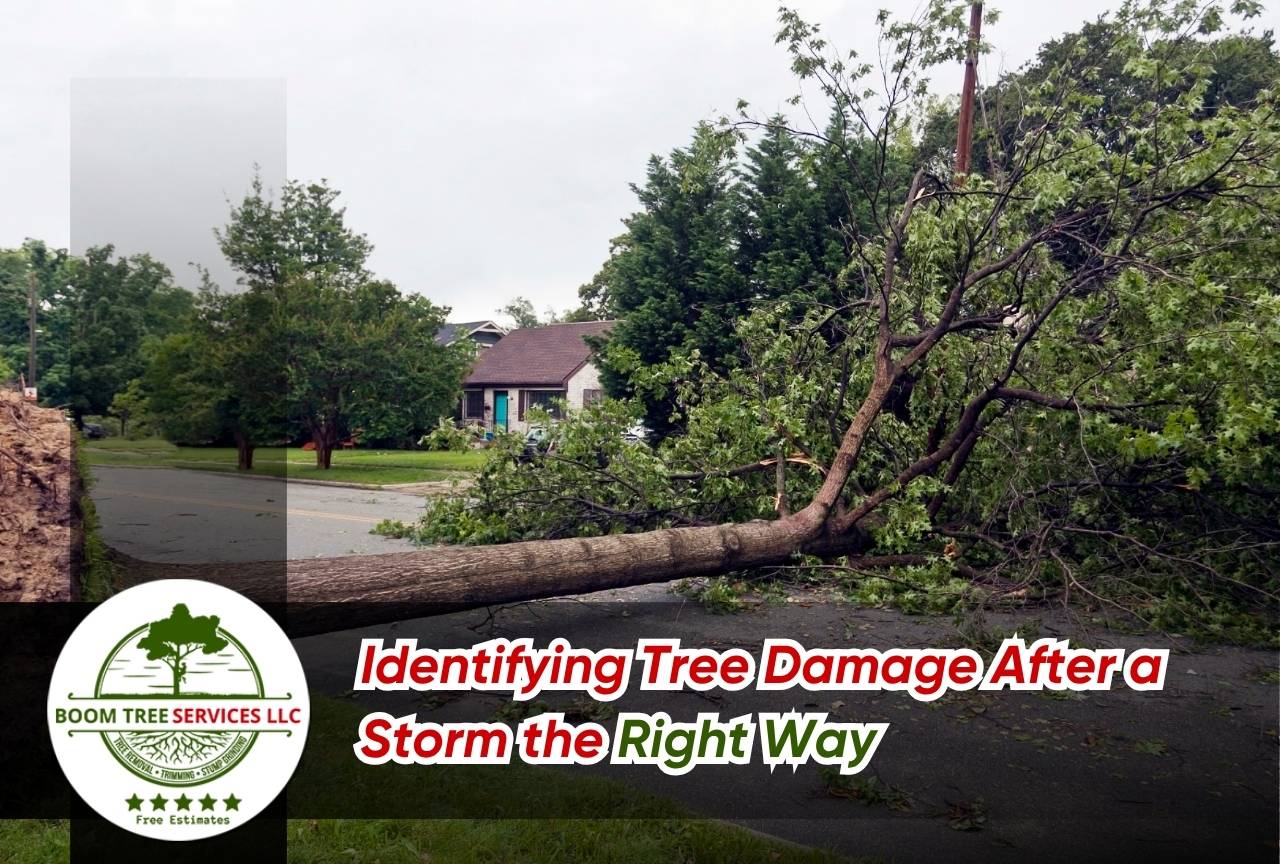
Storms can leave behind more than just puddles and debris—they often cause serious tree damage that’s easy to miss until it’s too late. Knowing how to inspect your trees properly is key to preventing further hazards. In this guide, we’ll show you everything you need to know about identifying tree damage after a storm, from spotting signs of instability to understanding when to call in professionals.
At Boom Tree Services LLC, we help homeowners across Huntsville evaluate, trim, and remove storm damaged trees before they become a bigger problem.
How Storms Affect Tree Safety
High winds, lightning, and heavy rain can all weaken a tree’s structure. Even if the tree is still standing, it may have internal cracks, broken limbs, or loosened roots. Tree damage from storm conditions can go unnoticed for days until a limb falls or the entire tree shifts suddenly.
Wind stress may cause a tree to lean or crack, while waterlogged soil can compromise root stability. These issues don’t always appear severe at first glance, which is why routine post-storm inspections are so important.
If you’re unsure what to look for, visit our tree removal safety tips to better understand how to stay safe while inspecting storm-damaged trees.
How to Inspect Trees After a Storm
Start from the ground up. Look for signs that the soil around the tree has shifted, cracked, or lifted—these can be indicators of unseen root damage. Then examine the trunk. Large splits, bark peeling, or a visible lean may mean the tree is no longer secure.
Check the canopy for hanging or broken branches, especially ones that could fall. Also look for lightning scars or missing limbs. These signs can tell you a lot about how to tell if a tree is unstable. Use caution when getting close to large limbs or leaning trees.
If anything looks suspicious or beyond your ability to assess safely, let a certified arborist take a closer look. We’re trained to identify tree risks after high winds and can spot the early signs of collapse or hidden decay.
When to Take Action on Storm Damaged Trees
If a tree poses a threat to people, structures, or utility lines, it should be removed or stabilized as soon as possible. Don’t wait until the next storm exposes the problem further. Even if you’re not sure the damage is serious, it’s better to have a professional assess it early.
Some trees can be saved with cabling or corrective pruning, while others may already be compromised. You should also consider past issues. Has the tree been declining in health before the storm? If so, recent weather may have made it worse. Check out our guide on signs of a dying tree for more insight.
FAQs – Identifying Tree Damage After a Storm
How do I know if my tree has storm damage?
Look for broken limbs, cracks in the trunk, a new lean, or loose soil around the roots. If you’re unsure what to look for, Boom Tree Services LLC can inspect the tree and recommend next steps.
How to tell if a tree is unstable after high winds?
A sudden lean, cracks at the base, or branches pulling away from the trunk are strong signs. Storms often loosen root systems, making the tree look fine one day and fall the next.
What should I do if I suspect a tree is unsafe?
Don’t get too close. Take photos, mark the area if needed, and contact Boom Tree Services LLC immediately. We’ll send a trained team to assess the risk and keep your property safe.
Protect Your Property After the Storm
Storms can turn even healthy trees into hazards overnight. The best way to stay ahead of costly damage is by knowing what to look for—and acting quickly. Boom Tree Services LLC offers storm inspections, emergency tree removal, and safety evaluations to help you move forward with peace of mind.
Schedule your tree inspection today and let us handle the hard part with expert care.